

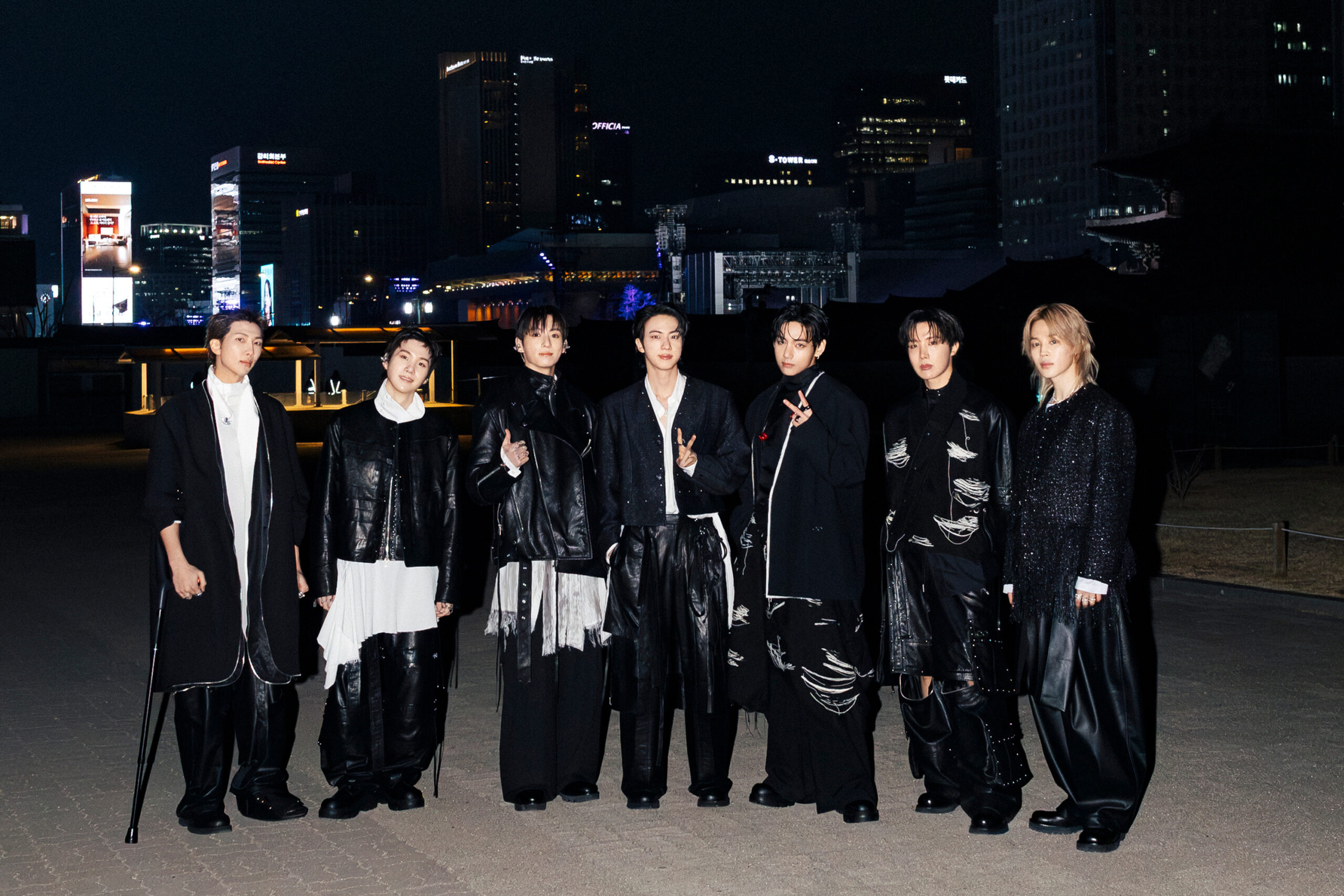
SEOUL — For the first time since their hiatus began in late 2022, all seven members of the global pop phenomenon BTS reunited on stage this Saturday, transforming the historic heart of South Korea’s capital into a vibrant sea of purple.
Set against the striking backdrop of Gwanghwamun Square and its centuries-old palace gates, RM, Jin, Suga, J-Hope, Jimin, V, and Jung Kook delivered a monumental one-hour performance. According to HYBE, the band’s management agency, the event drew an estimated 104,000 attendees, signaling a triumphant return for the group following the completion of their mandatory military service.
The Dawn of the Arirang Era
The comeback concert served as the live debut for tracks from the septet’s highly anticipated new album, Arirang, which dropped on Friday.
- Record-Shattering Sales: Big Hit Music reported that the album moved a staggering 3.98 million units within its first 24 hours.
- Historical Roots: The album borrows its name from Korea’s most famous traditional folk song, a poignant melody about overcoming adversity.
- Cultural Parallels: In a clever promotional nod, the band highlighted an 1896 recording of the original “Arirang” performed by seven Korean men in the United States, drawing a 130-year parallel between those early cultural ambassadors and BTS’s modern global dominance.
Unprecedented Security and City-Wide Impact
The sheer scale of the gathering required a massive logistical response from Seoul’s government, turning the city center into a highly fortified open-air arena.
- Law Enforcement: A deployment of 7,000 police officers, including specialized SWAT teams with anti-drone technology, secured the perimeter.
- Access Control: Attendees passed through 31 distinct entry gates equipped with metal detectors. To ensure maximum safety, authorities even temporarily suspended civilians’ ability to retrieve legally owned firearms from local police stations.
- Transit Disruptions: Three nearby subway stations were shuttered, and access to surrounding commercial buildings was heavily restricted.
While local businesses ranging from hotels booking up months in advance to restaurants translating menus and decorating with purple flowers reveled in the economic boom, the event was not without domestic friction. The heavy security presence and road closures caused severe logistical headaches for locals. One Seoul resident reported severe complications regarding her nearby wedding, while critics online debated the precedent of effectively paralyzing the city’s public square for a private entertainment agency’s event. Conversely, defenders argued that a temporary disruption is a small price to pay for a group that has generated billions for the South Korean economy and elevated the nation’s global soft power.
The Fan Experience: Live, Screened, and Streamed
Securing entry into the exclusive cordoned-off zone was a monumental feat. A total of 20,000 complimentary tickets were released in two batches, vanishing in minutes as over 100,000 fans crashed the digital queues.
For international students like Ami Ostrovskaia who credited the band for inspiring her relocation from Russia to study Korean culture securing a ticket felt life-changing. Meanwhile, tens of thousands of ticketless fans, including travelers from Germany and Mexico, gathered outside the barricades to watch the historic reunion on massive outdoor screens.
For the millions of “ARMY” members unable to travel to Seoul, streaming giant Netflix held the exclusive rights to broadcast the live performance. This partnership, which will also yield an upcoming documentary on the group’s reunion, represents a major victory for the platform’s ongoing investment in Korean media.
A Billion-Dollar Horizon
Saturday’s performance is just the beginning. Next month, BTS will embark on an extensive 82-date world tour spanning more than 30 cities, including Los Angeles, Munich, Tokyo, and Singapore.
Industry analysts project the tour could generate upward of $1 billion (£747m) in revenue. Given that pre-hiatus estimates suggested a single BTS show could inject up to $842 million into the local economy through tourism and merchandise, the group’s return is poised to be as much of a financial triumph as it is a cultural one.
Exclusive report by KRAZE